
Student Portfolio Website: How to Land Internships With Class Projects
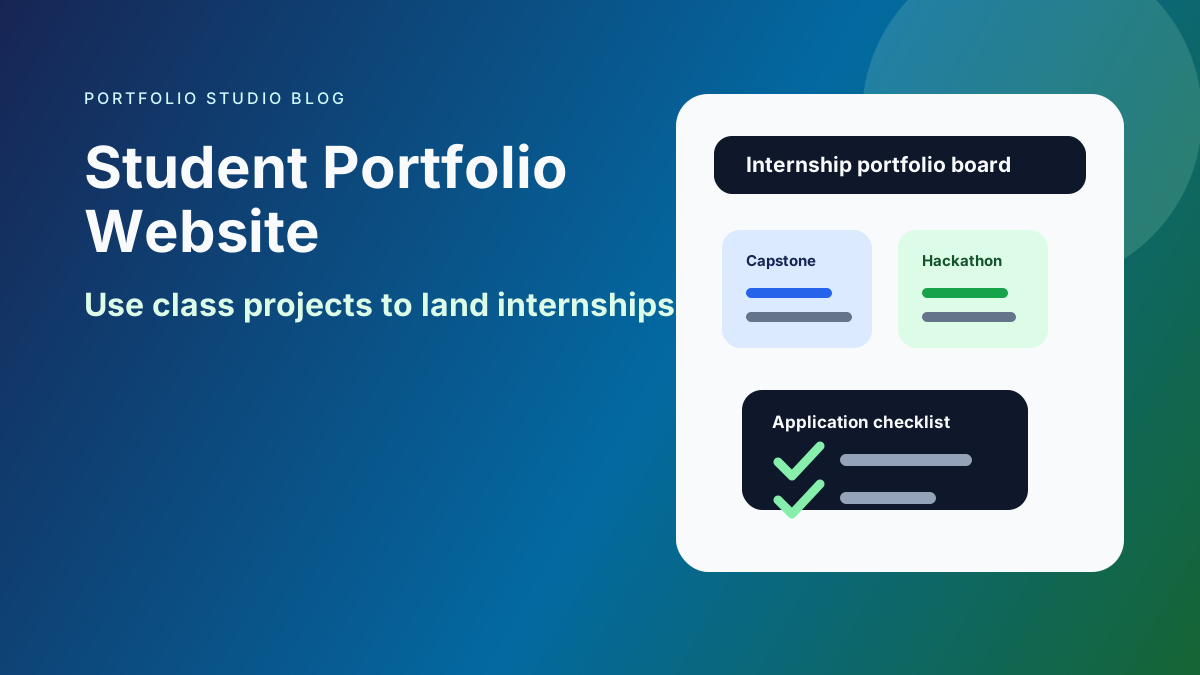
Key Takeaways
- A student portfolio website can help you stand out even before you have full-time work experience
- Class projects, capstone work, research papers, hackathons, volunteer work, and personal projects can all become portfolio pieces
- Recruiters care less about whether a project was paid and more about whether it shows clear thinking
- Keep the site simple: introduction, projects, skills, resume, and contact
- Update the portfolio each semester so it grows with your experience
Students often wait too long to build a portfolio because they think they need professional experience first.
That is backwards. A student portfolio website is useful because it gives you a place to show promise before your resume is crowded with jobs. It turns class projects, coursework, and personal experiments into evidence.
If you are starting from a resume, read Resume Website: How to Turn Your Resume Into a Website. If you need a resume first, use the free resume builder guide.
Why Students Should Build a Portfolio Early
Internship and entry-level applications often look similar. Many candidates have the same degree program, similar coursework, and limited work history.
A portfolio gives reviewers something more concrete:
- How you explain your work
- What problems you have tried to solve
- What tools you can use
- How you learn independently
- How you present details
That does not mean the site needs to be complex. It needs to be clear.
What Counts as Portfolio Work?
Students usually have more portfolio material than they think.
Useful examples include:
- Class projects
- Capstone projects
- Research papers
- Lab work
- Hackathon projects
- Design exercises
- Writing samples
- Volunteer work
- Campus organization projects
- Personal experiments
- Open-source contributions
The project does not need to be perfect. It needs to show your role, the goal, and what you learned or produced.
The Best Student Portfolio Structure
Most student portfolio websites should use a simple structure.
Homepage
Open with your name, field, school or target role, and one clear sentence about what you are building toward.
Examples:
- “Computer science student focused on full-stack web apps and developer tools.”
- “UX design student exploring research-led product design.”
- “Marketing student building content, analytics, and campaign strategy projects.”
Projects
Choose three to five projects. For each one, include:
- The project goal
- Your role
- Tools or methods used
- What you made
- What changed after feedback or iteration
- Link, screenshot, file, or demo when possible
Resume
Include a downloadable resume. Hiring teams may still need the PDF for applicant tracking systems or internal sharing.
Skills
List skills in groups. Avoid a long pile of keywords. A computer science student might separate languages, frameworks, databases, and tools. A design student might separate research, prototyping, visual design, and collaboration.
Contact
Add email, LinkedIn, GitHub, Behance, or other relevant links. Make sure every link works.
How to Write Project Descriptions
A strong student project description is honest and specific.
Use this format:
- What was the assignment or challenge?
- What did you personally do?
- What constraints did you work under?
- What result did you create?
- What would you improve next?
The last question is especially useful for students. It shows maturity. You do not need to pretend every project was flawless.
Portfolio Tips for Internship Applications
Tailor your homepage and project order to the role you want.
If you are applying for frontend internships, put interface and code projects first. If you are applying for data roles, lead with analysis, visualization, or modeling projects. If you are applying for design internships, show process, not only final screens.
Also make your portfolio link visible:
- Resume header
- LinkedIn profile
- Email signature
- GitHub profile
- Application form website field
Common Mistakes
Waiting Until Graduation
Your portfolio is easier to build when you update it gradually. Add projects while the details are fresh.
Showing Projects Without Context
A screenshot alone is not enough. Explain the goal, your role, and what you learned.
Overdesigning the Site
A simple portfolio that loads fast is better than a complex site that hides the work.
Apologizing for Being Early Career
Do not write like you are asking for permission. Be clear about what you know, what you built, and what you are looking for next.
Frequently Asked Questions
Do students need a portfolio website?
Not every student needs one, but it is very useful for internships, creative roles, technical roles, research roles, and any field where work samples matter.
What if I only have class projects?
Class projects are valid portfolio material. Explain the assignment, your role, your process, and the outcome.
How many projects should a student portfolio include?
Start with three strong projects. Add more only if they show different skills or a stronger fit for your target role.
A student portfolio website is not about pretending to be more experienced than you are. It is about making your current work easier to evaluate. Start small, show your best evidence, and keep improving it as your skills grow.
Ready to build your portfolio?
Create a professional portfolio website in minutes with AI. No coding required.
Try Portfolio Studio FreeRelated Articles

Portfolio Website for Job Seekers: What to Include to Get Interviews
Learn what a portfolio website for job seekers should include, from projects and proof to recruiter-friendly structure, messaging, and SEO.
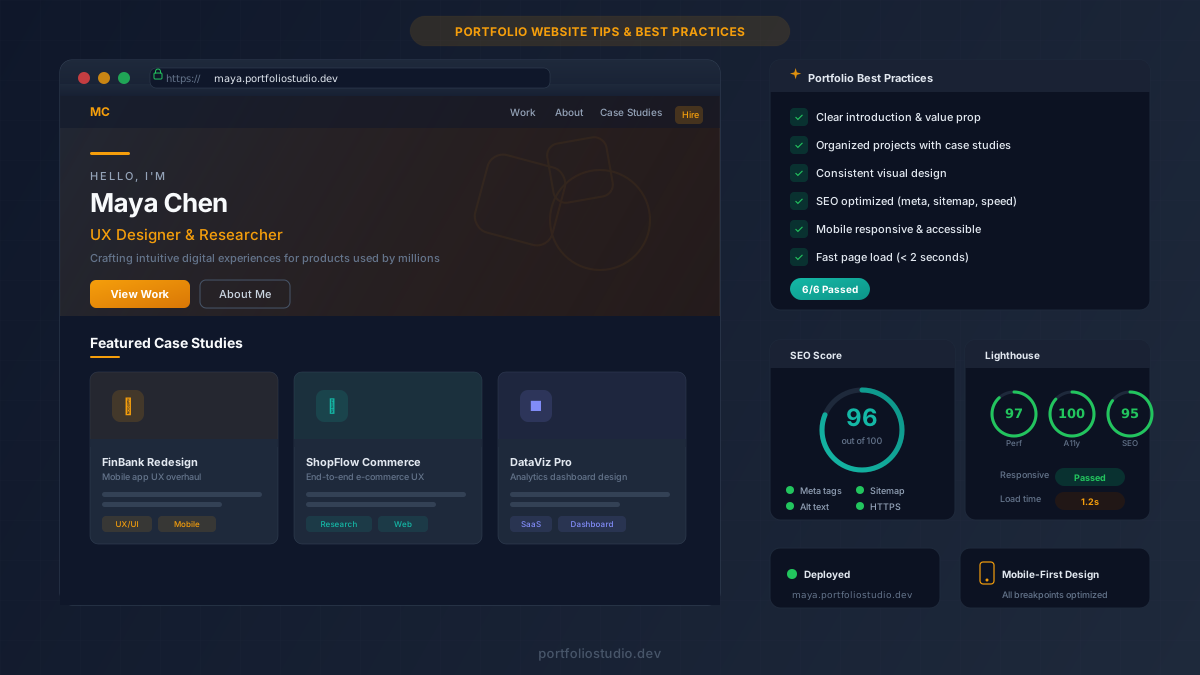
Build an Impressive Portfolio Website: Tips & Best Practices for 2026
Learn how to build a portfolio website that wins clients and lands jobs. Covers design, SEO, case studies, and promotion tips for every career.
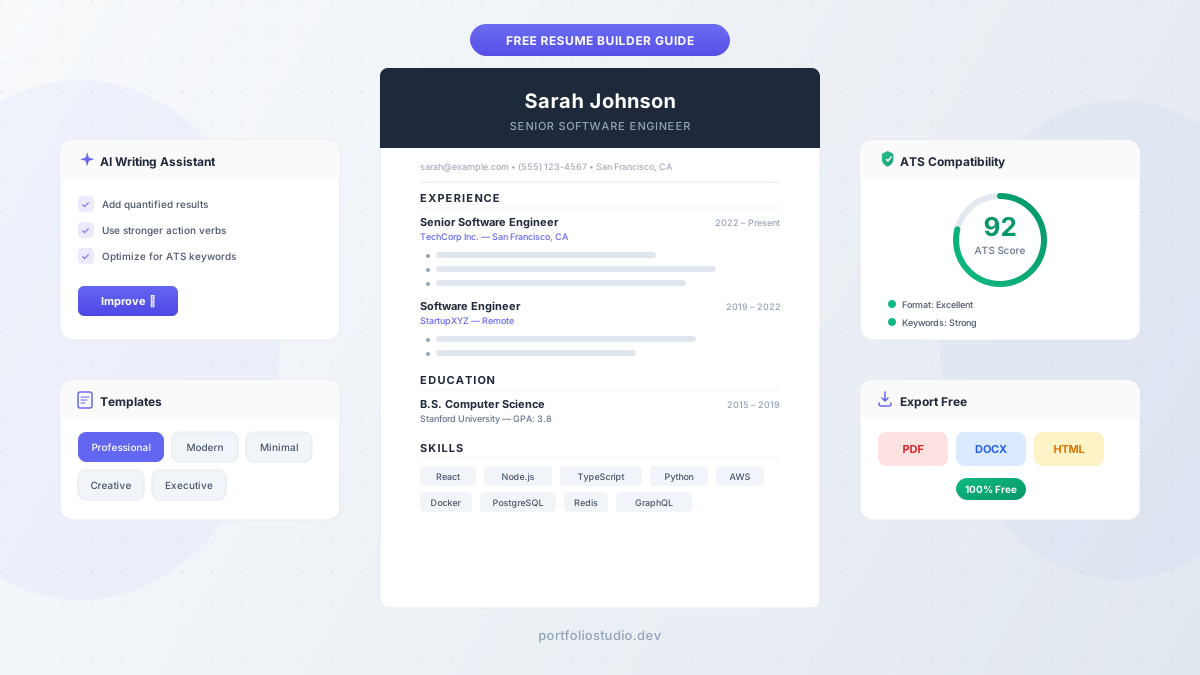
Free Resume Builder: How to Build a Job-Winning Resume for $0 in 2026
Use a free resume builder to create professional, ATS-friendly resumes that land interviews. Step-by-step guide with AI tips, templates, and mistakes to avoid.