
Where to Upload Your Architecture Portfolio to Attract Canadian Employers

Key Takeaways
- To attract Canadian employers, an architecture portfolio should be easy to review, well-labeled, and professionally presented
- Most candidates should keep both a portfolio website and a concise PDF version ready
- The best upload platform depends on whether you want a full website, a project showcase, or a document-style presentation
- Architecture portfolios need stronger project framing than many other creative portfolios because context matters
- Clarity, relevance, and professional polish matter more than visual complexity
If you are applying to architecture jobs in Canada, your portfolio needs to do more than look impressive. It needs to be easy for hiring teams to review quickly.
Canadian employers typically want to understand your role, the project type, the scale of the work, the software or methods involved, and how clearly you communicate design thinking. That means your portfolio platform matters, but your presentation decisions matter even more.
Best Places to Upload an Architecture Portfolio
Your Own Portfolio Website
Best for long-term visibility and a more professional personal brand.
Behance
Useful for discovery and public presentation, especially for visual project browsing.
PDF Hosting or Presentation Platforms
Helpful if you want to share a tightly edited application-ready portfolio quickly.
Creative-Focused Website Builders
Good if you want portfolio templates, project pages, and a custom domain without coding.
Personal Site + PDF Combination
For many candidates, this is the best setup. The website supports discoverability and credibility. The PDF supports applications.
What Canadian Employers Usually Want to See
- a short introduction
- selected academic or professional projects
- your specific role
- clear drawings, diagrams, and visuals
- concise project context
- software or technical capability where relevant
- contact details
They are not looking for a giant archive. They are looking for judgment.
How to Structure Architecture Projects
For each project, include:
- project name and type
- location or context
- your role
- short design challenge
- drawings, renders, and selected process material
- final outcome or key learning
Make sure image captions and sequence help the reviewer understand the work.
Website vs PDF for Architecture Applications
Website
Better for:
- general visibility
- networking
- recruiter discovery
- ongoing updates
Better for:
- direct applications
- controlled presentation
- offline sharing
- consistent review across firms
Most architecture candidates should use both.
Common Mistakes
Making the Portfolio Too Dense
Architecture work often includes a lot of material. Edit hard.
Failing to Explain Your Role
This is essential in team or studio work.
Using Weak Project Order
Lead with the work that best matches the firms you want.
Overdesigning the Interface
The project content should carry the site.
Tailoring Your Architecture Portfolio for Canadian Firms
Canadian architecture practices vary widely, from large multidisciplinary firms to small residential studios, and a portfolio that lands interviews usually speaks to the kind of work a specific firm does. Before you apply, look at the firm’s recent projects and lead with the work in your portfolio that is closest to theirs. A studio focused on sustainable housing will respond to different projects than a commercial practice known for institutional work.
A few practical adjustments make a Canadian application stronger:
- Lead with relevant project types. Reorder your portfolio so the first two or three projects match the firm’s focus, whether that is residential, commercial, public, or landscape-led work.
- Show your technical range. Canadian firms often want evidence that you can move from concept to documentation. Include at least one project that shows plans, sections, and detail thinking, not only renders.
- Note your software and standards. Mention the tools you actually use — Revit, Rhino, AutoCAD, and visualization software — so a reviewer can place your skills quickly.
- Keep an application-ready PDF. Many firms still ask for a portfolio attachment with a size limit. Keep a compressed PDF (usually under 10–15 MB) that mirrors your website so you are ready the moment a posting opens.
The goal is not to rebuild your portfolio for every application. It is to make small, intentional changes — order, emphasis, and a tailored cover note — that show a firm you understand their work and can contribute to it.
If you want a faster way to keep a website and a matching PDF in sync, an AI portfolio builder can generate both from the same source material, so updating one does not mean rebuilding the other.
Frequently Asked Questions
Where should I upload my architecture portfolio to attract Canadian employers?
The safest setup is usually a personal portfolio website plus a concise PDF for applications.
Do Canadian employers prefer a website or PDF?
Many will review both. A PDF is still common in applications, but a website adds credibility and discoverability.
What should I prioritize in an architecture portfolio?
Project clarity, your role, strong visuals, and a sequence that makes the work easy to understand quickly.
The best place to upload an architecture portfolio is the platform that helps Canadian employers review your work without friction. When your projects are well-framed and easy to scan, the platform starts helping instead of getting in the way.
Ready to build your portfolio?
Create a professional portfolio website in minutes with AI. No coding required.
Try Portfolio Studio FreeRelated Articles
Graphic Design Portfolio: How to Create a Professional Digital Portfolio Online
How to create a professional graphic design portfolio, choose the right platform, and present your work so clients and employers trust it.
How to Make a Portfolio Website: The Complete 2026 Guide
Learn how to make a portfolio website step by step: plan it, choose a builder, write strong project pages, optimize for SEO, and publish — the complete guide.
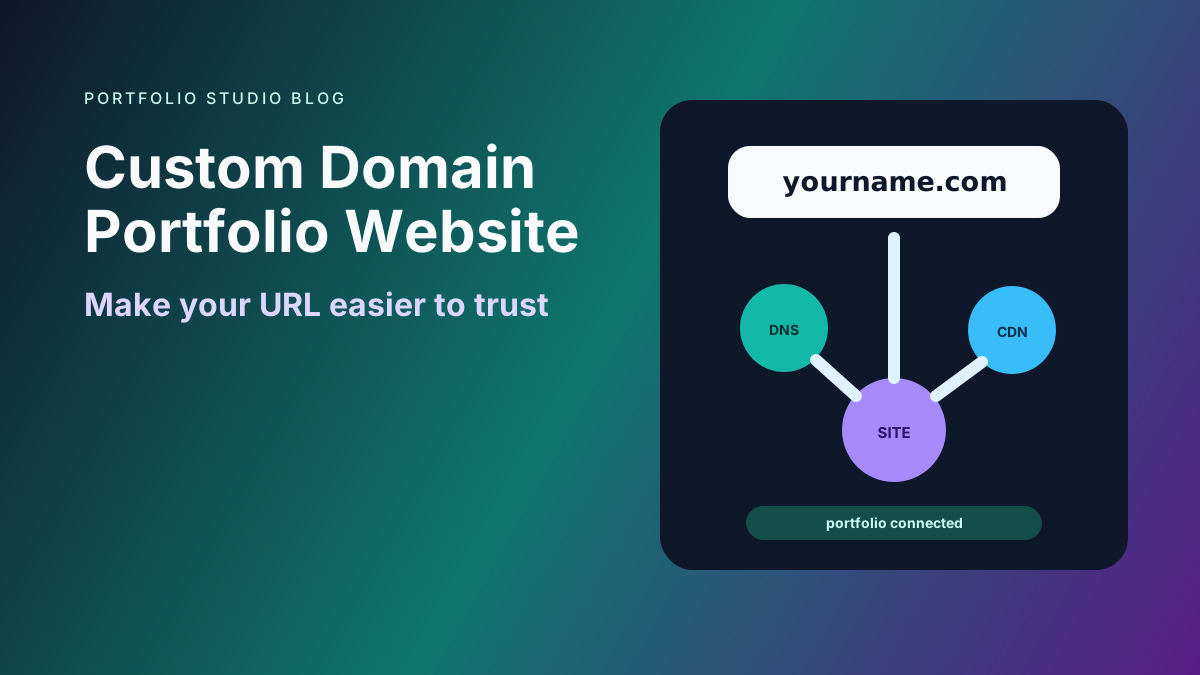
Custom Domain for Portfolio Websites: When It Matters
Learn when a custom domain matters for a portfolio website, how it affects trust and personal branding, and when a free subdomain is enough.