
Custom Domain for Portfolio Websites: When It Matters
Key Takeaways
- A custom domain portfolio website can make your site feel more professional, memorable, and easier to share
- A free subdomain is usually enough for early drafts, student portfolios, and quick job-search launches
- Custom domains matter more for freelancers, consultants, senior professionals, and long-term personal brands
- The domain should be simple, readable, and consistent with your name or professional identity
- A custom domain does not fix weak content; it only strengthens a portfolio that already communicates well
Your portfolio URL affects trust.
It is not the most important part of your portfolio. Your work, positioning, and proof matter more. But the URL is often the first detail someone sees when you share the site in a resume, email, proposal, or LinkedIn message.
A custom domain can make that first detail feel more intentional.
If you are still building the core site, start with What Sections to Include in Your Portfolio Website. If you are comparing builder options, read Best Portfolio Website Builder in 2026.
What Is a Custom Domain?
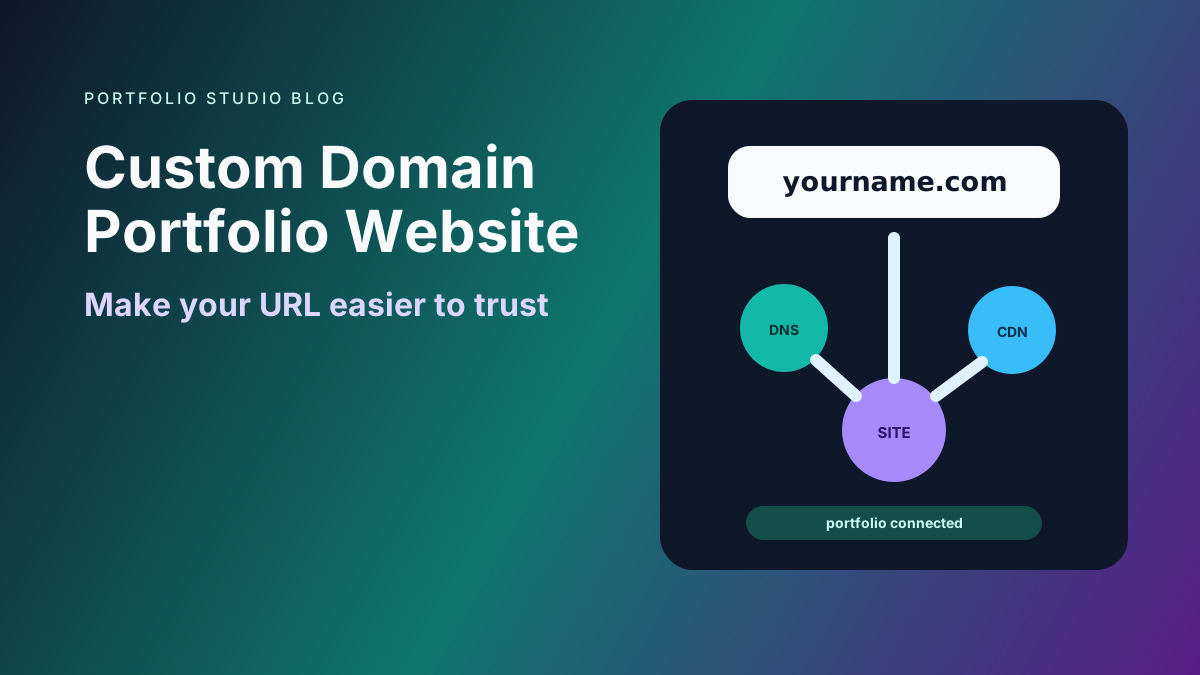
A custom domain is a web address you own, such as:
- janedoe.com
- alexdesigns.com
- samwrites.co
- yourname.dev
This is different from a platform subdomain, such as:
- yourname.portfoliostudio.dev
- yourname.builderexample.com
Subdomains are useful because they let you publish quickly. Custom domains are useful because they give your portfolio a more independent identity.
When a Free Subdomain Is Enough
A free subdomain is usually fine when:
- You are testing your first portfolio
- You are a student
- You need to publish quickly
- You are applying for internships
- You are sharing the site with a small audience
- You do not yet know your long-term positioning
Do not delay publishing just because you have not chosen the perfect domain. A clear live portfolio on a subdomain is better than an unpublished portfolio on a domain you never launch.
When a Custom Domain Matters
A custom domain becomes more valuable when your portfolio supports long-term credibility.
It matters more if you are:
- Freelancing
- Consulting
- Building a personal brand
- Applying for senior roles
- Publishing writing or resources
- Speaking or networking publicly
- Sending proposals to clients
- Trying to rank for your name
In those cases, your portfolio is not just an application link. It is part of your professional identity.
How a Custom Domain Helps
It Looks More Professional
A custom domain signals that the site is intentional and maintained.
It Is Easier to Remember
Your name or brand is easier to recall than a long platform URL.
It Supports Personal Branding
If your website, email, and social profiles use the same identity, you look more consistent.
It Gives You Portability
If you change platforms later, the domain can move with you.
It Helps Search Presence
Owning a domain around your name can help create a stronger search result for your professional identity.
How to Choose a Portfolio Domain
Keep it simple.
Good domain patterns:
- First name + last name
- Name + discipline
- Short professional brand
- Name + common extension
Avoid:
- Hard-to-spell words
- Too many hyphens
- Trendy terms you may outgrow
- Very long phrases
- Domains that sound like someone else’s brand
If your exact name is taken, try a variation:
- usejanedoe.com
- janedoedesign.com
- janedoe.dev
- janedoeworks.com
What a Custom Domain Does Not Fix
A custom domain cannot save a weak portfolio.
It does not fix:
- Vague positioning
- Missing projects
- Broken links
- Weak case studies
- Poor mobile layout
- No contact path
- Outdated content
Fix those first. Then a custom domain can make the finished site feel more credible.
Custom Domain vs Subdomain
Use a subdomain when speed matters most.
Use a custom domain when trust, personal brand, and long-term ownership matter more.
Many people should start with a subdomain, publish the site, improve the content, then connect a custom domain once the portfolio is worth sharing broadly.
Common Mistakes
Waiting Too Long to Publish
Do not let domain decisions block the whole portfolio.
Choosing a Domain That Is Too Clever
Clarity beats cleverness. Your domain should be easy to say and type.
Changing Domains Often
Frequent changes create broken links and confusion. Pick something durable.
Forgetting Renewal
If you buy a domain, keep track of renewal settings and account access.
Frequently Asked Questions
Do I need a custom domain for my portfolio?
Not always. A custom domain helps with professionalism and personal branding, but a clear portfolio on a subdomain is enough for many early-stage use cases.
What domain should I use for my portfolio?
Use your name if possible. If not, choose a short variation that reflects your professional identity.
Is a custom domain worth it for freelancers?
Usually yes. Freelancers use their portfolio to build trust with clients, and a custom domain can make the site feel more established.
A custom domain is not the foundation of a strong portfolio. It is a credibility layer. Build the content first, publish quickly, and add the domain when your portfolio is ready to support bigger opportunities.
Ready to build your portfolio?
Create a professional portfolio website in minutes with AI. No coding required.
Try Portfolio Studio FreeRelated Articles
How to Make a Portfolio Website: The Complete 2026 Guide
Learn how to make a portfolio website step by step: plan it, choose a builder, write strong project pages, optimize for SEO, and publish — the complete guide.
Free Portfolio Website Builder: What to Look For in 2026
Learn how to choose a free portfolio website builder, what limits to watch for, and when to upgrade from a free portfolio site.
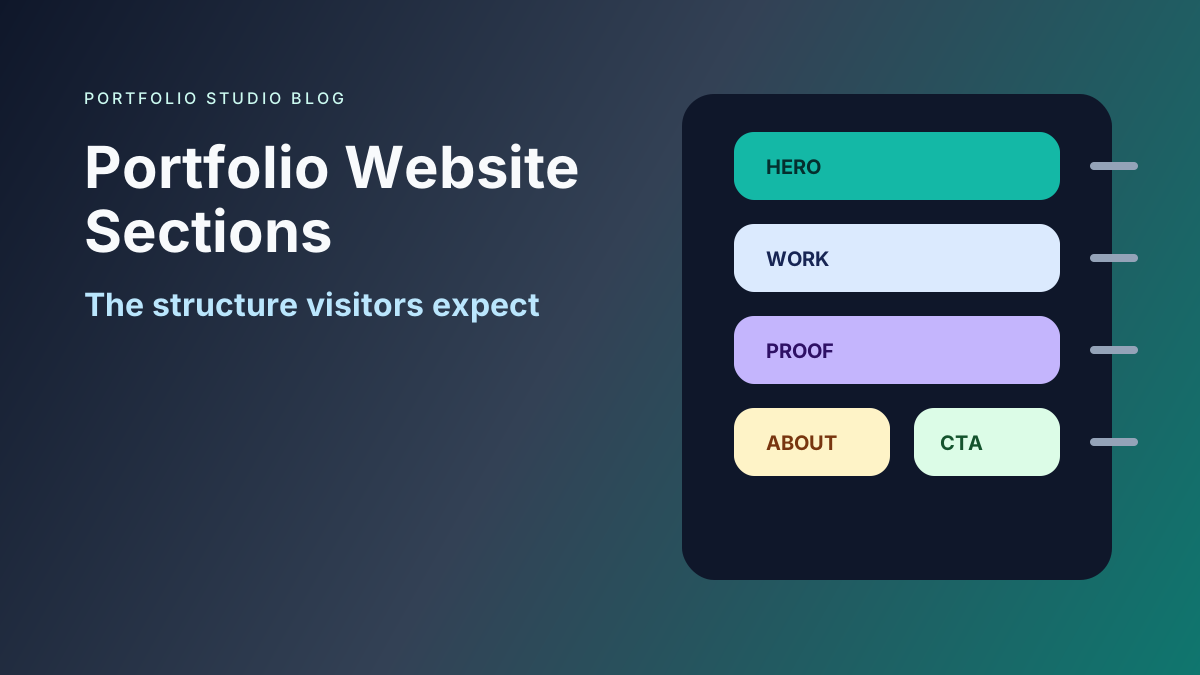
What Sections to Include in Your Portfolio Website
Learn which portfolio website sections matter most, how to order them, and what to include for job seekers, freelancers, students, and professionals.