
Freelancer Portfolio Website: How to Win More Clients
Key Takeaways
- A freelancer portfolio website should sell trust before it sells services
- The best freelancer portfolios explain who you help, what problems you solve, and what results clients can expect
- Case studies, testimonials, and service pages matter more than a large gallery of past work
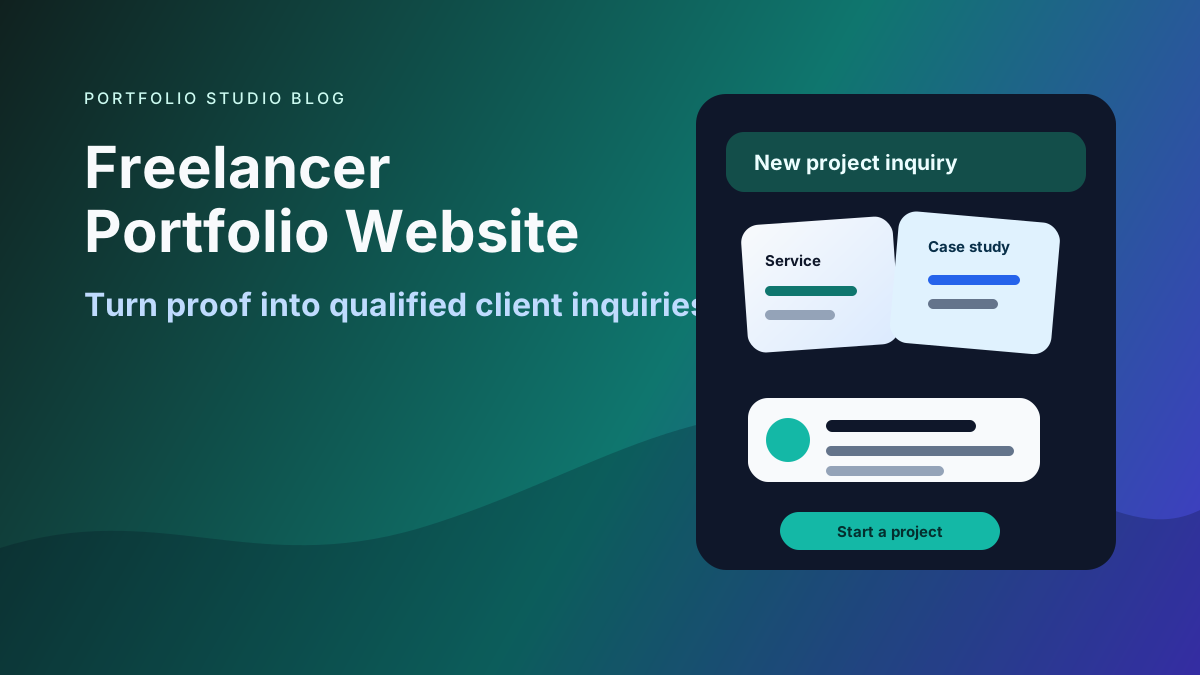
- Your portfolio should make the next step obvious: inquiry, booking, consultation, or email
- A focused site helps you compete on value instead of price
Freelancers do not just need a place to show work. They need a site that helps a potential client decide whether to start a conversation.
That is what makes a freelancer portfolio website different from a general creative portfolio. A designer, writer, developer, marketer, consultant, or photographer may all show projects differently, but the goal is the same: make a client feel confident that you understand their problem and can deliver.
If you are still choosing a platform, read Best Portfolio Website Builder in 2026. If you want to build without code, start with No Code Portfolio Website Builder.
What a Freelancer Portfolio Website Should Do
A good freelancer portfolio should answer four questions quickly:
- What do you do?
- Who do you help?
- What proof do you have?
- How can someone hire you?
Many freelancers make the mistake of treating the site like a scrapbook. They add every project, every skill, and every platform they have ever used. That creates noise. A client is not trying to understand your whole career. They are trying to decide whether you are a good fit for their current problem.
The strongest freelancer portfolios are selective. They show the work that supports the kind of clients you want next.
Start With Positioning
Your homepage should make your offer clear before a visitor scrolls.
Weak positioning sounds like:
- “Freelance designer and creative problem solver”
- “Full-stack developer available for projects”
- “Content marketer helping brands grow”
Better positioning is more specific:
- “Brand and web designer for early-stage SaaS teams”
- “Freelance React developer for marketing sites and product dashboards”
- “SEO content strategist for B2B software companies”
Specificity does not reduce your opportunities. It helps the right clients recognize themselves faster.
Show Services Without Sounding Generic
A freelancer portfolio website should usually include a services section. Keep it practical and buyer-focused.
Instead of listing only skills, describe outcomes:
- Website redesigns that improve credibility and conversion
- Technical content that turns product knowledge into qualified search traffic
- Web app frontends built with clean, maintainable components
- Brand identity systems for companies preparing to launch
Each service should explain the problem, the deliverable, and the kind of client it fits.
Build Case Studies Around Client Concerns
Clients want to know how you work. A strong case study does not need to be long, but it should include context.
Use this structure:
- The client or situation
- The problem
- Your role
- The process or key decisions
- The result
If you cannot share the client name, anonymize the details. “A seed-stage fintech startup” is often enough. If you do not have metrics, describe the useful outcome: a clearer launch site, faster publishing workflow, stronger sales collateral, better project handoff, or improved stakeholder confidence.
For broader project structure advice, see What Sections to Include in Your Portfolio Website.
Add Trust Signals
Trust signals help a client feel safe reaching out. Useful signals include:
- Testimonials
- Client logos
- Before-and-after examples
- Screenshots of delivered work
- Short process notes
- Links to live projects
- Certifications or niche experience
Do not bury these signals on a separate page. Put them near the relevant service or case study.
Make Contact Easy
Your call to action should match how you sell.
If your work requires discussion, use “Book a consultation” or “Start a project inquiry.” If your process is simple, an email link may be enough. If you sell packaged services, include enough detail for the buyer to understand what happens next.
Avoid vague calls to action like “Learn more” when the visitor is already on your site. Tell them what to do.
Should You List Pricing?
It depends on your sales process.
Pricing can help if you offer packages, want to filter out poor-fit leads, or work in a market where clients expect a range. It can hurt if every project is custom and the number requires context.
A good middle ground is to list starting prices or project ranges:
- Website strategy sprint: from $1,500
- Portfolio redesign: from $2,000
- Monthly content support: from $3,000/month
This keeps the conversation qualified without forcing you into one rigid rate.
Common Mistakes
Showing Too Much Work
More projects do not automatically create more trust. If a project is weak, outdated, or unrelated to your target clients, remove it.
Hiding the Services
Clients should not have to infer what they can hire you for. Make the services explicit.
Writing Only About Yourself
Your story matters, but clients care about their own risk. Explain what you help them achieve.
Making the Contact Path Too Clever
If someone wants to hire you, the next step should be immediate and obvious.
Frequently Asked Questions
What should a freelancer portfolio website include?
Include a clear homepage, services, selected case studies, testimonials, an about section, and a direct contact path.
How many projects should a freelance portfolio show?
Usually three to six strong projects are enough. Choose work that matches the clients and services you want next.
Can I build a freelancer portfolio without code?
Yes. A no-code or AI-assisted portfolio builder is usually enough if your positioning, proof, and contact flow are clear.
A freelancer portfolio website should do more than prove you can do the work. It should make the right client feel ready to take the next step. Keep the site specific, proof-led, and easy to act on.
Ready to build your portfolio?
Create a professional portfolio website in minutes with AI. No coding required.
Try Portfolio Studio FreeRelated Articles

Data Science Portfolio Website: Turn Notebooks Into Case Studies
Learn how to build a data science portfolio website that turns notebooks, models, dashboards, and analysis projects into hiring-ready case studies.
Product Manager Portfolio: What to Include When You Do Not Have Visual Work
Learn how to build a product manager portfolio that shows strategy, product thinking, tradeoffs, metrics, and impact without relying on visual artifacts.

UX Research Portfolio: How to Show Impact Without Breaking NDA
Learn how to build a UX research portfolio that presents methods, insights, stakeholder influence, and product impact while respecting confidentiality.