
Portfolio Website for Professionals: Build Authority With Your Personal Brand

Key Takeaways
- A portfolio website for professionals should do more than display work; it should build trust and authority
- The best professional site combines clear positioning, strong proof, and a consistent personal brand
- A site for established professionals usually needs case studies, testimonials, bio, and thought-leadership signals
- A personal brand website builder is useful when it helps you communicate expertise, not just decorate a homepage
- The strongest professional websites are easy to understand, easy to update, and aligned with the audience they want to attract
Once you move beyond early-career job search, your website has a broader job to do.
It is no longer just a place to show projects. It becomes a platform for credibility, authority, and long-term reputation. That is what makes a portfolio website for professionals different from a basic starter portfolio.
If your site is meant to support consulting, leadership visibility, speaking, client trust, or higher-value opportunities, you need stronger messaging than “here is my work.”
What Makes a Portfolio Website for Professionals Different?
Professional portfolios are less about proving that you can do the work at all and more about proving that you are the right person to trust with bigger work.
That means the site should communicate:
- What you are known for
- Who you help
- What outcomes you create
- Why your perspective is credible
This is where a professional website builder or personal brand website builder becomes valuable. The platform should support authority-building, not just page creation.
What to Include on a Professional Portfolio Website
1. Strong Positioning
Open with a clear statement of expertise. Skip broad labels like “experienced professional.” Say what you actually do and for whom.
2. Proof of Work
Case studies, selected projects, or business outcomes should sit near the center of the site. Professionals are often judged on depth and results, not just visuals.
3. Credibility Signals
These might include:
- Testimonials
- Client logos
- Speaking appearances
- Publications
- Awards
- Media mentions
- Certifications
4. Personal Brand Elements
Your tone, visuals, and site structure should feel consistent. A portfolio website for professionals should communicate confidence and clarity, not generic template language.
5. Clear Contact Path
If the site supports consulting or inbound opportunities, the next step needs to be obvious. Contact page, booking link, inquiry form, or email should be easy to find.
Portfolio Website for Professionals vs Personal Website
A personal website can be simple and broad. It may focus on bio, writing, and general career visibility.
A portfolio website for professionals is more outcome-driven. It usually needs stronger proof, clearer audience targeting, and more business or authority framing.
The best version often combines both:
- Personal clarity
- Professional proof
- Brand consistency
- Search visibility
If you are earlier in the process, start with Personal Website Builder: How to Create a Personal Website for Work.
What a Personal Brand Website Builder Should Help You Do
The best personal brand website builder should make it easy to:
- Clarify your expertise
- Publish work and thought leadership
- Highlight proof without clutter
- Add or update testimonials
- Keep the site visually consistent
It should not force you into an overly generic layout that makes everyone sound the same.
Sections That Build Authority
Signature Work
Show the kind of work you want more of, not every piece of work you have ever done.
Case Studies With Outcomes
Professional audiences care about impact. Explain the business problem, your role, your approach, and the result.
Thought Leadership
Articles, frameworks, talks, or perspectives help move your site from portfolio to authority platform.
Social Proof
Even a few strong testimonials can shift perception quickly. Third-party trust signals matter.
SEO for Professional Visibility
Many professionals treat their website like a brochure and forget that discoverability matters.
Use your site to rank for:
- Your name
- Your role
- Your niche or specialization
- Services or topics you want to be known for
That means writing strong page titles, using clear headings, and publishing content that reinforces your expertise. For broader site strategy, see Build an Impressive Portfolio Website: Tips & Best Practices for 2026.
Common Mistakes Professionals Make
Being Too Modest
If your site under-explains your experience, people will underestimate it.
Being Too Broad
Trying to appeal to everyone weakens your positioning.
Listing Work Without Framing
A logo wall is not a case study. Give context.
Neglecting Personal Brand Consistency
If your tone, visuals, and structure feel random, the site feels less credible.
Frequently Asked Questions
What should a portfolio website for professionals include?
Clear positioning, proof of work, credibility signals, personal brand consistency, and a strong contact path.
Who needs a professional website builder?
Consultants, senior operators, creatives, independent professionals, and anyone using their reputation to attract opportunities.
What is the difference between a personal brand website and a regular portfolio?
A personal brand website goes beyond showing work. It communicates expertise, perspective, trust, and authority in a market.
A portfolio website for professionals should make your experience easier to trust and your expertise easier to remember. If your site does that consistently, it becomes much more than a portfolio. It becomes a reputation asset.
Ready to build your portfolio?
Create a professional portfolio website in minutes with AI. No coding required.
Try Portfolio Studio FreeRelated Articles
AI Personal Website Builder: Create a Personal Brand Site From Your Resume
Use an AI personal website builder to create a personal brand site from your resume, experience, projects, and professional goals.
Personal Website Builder: How to Create a Personal Website for Work
Learn how to choose a personal website builder and create a personal website for work, credibility, networking, and career growth.
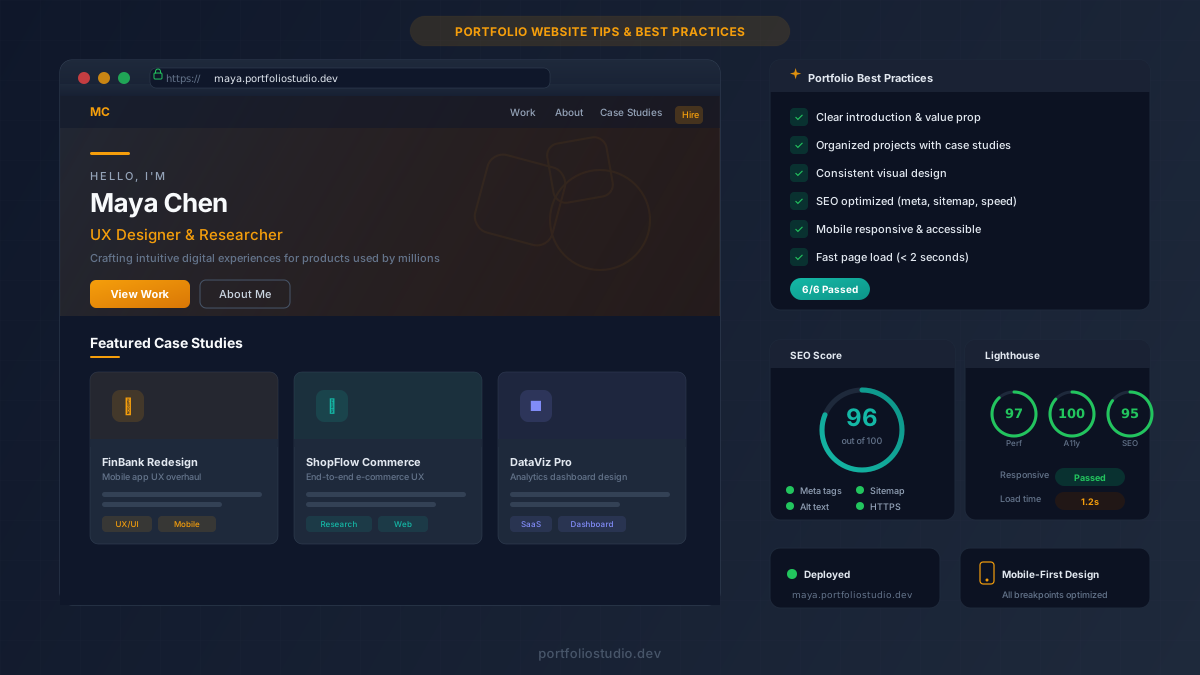
Build an Impressive Portfolio Website: Tips & Best Practices for 2026
Learn how to build a portfolio website that wins clients and lands jobs. Covers design, SEO, case studies, and promotion tips for every career.