
Resume Website: How to Turn Your Resume Into a Website
Key Takeaways
- A resume website gives your experience more context than a one-page PDF
- The best website for resume content keeps the structure simple: summary, experience, selected work, and contact
- A resume website is especially useful for job seekers in creative, technical, client-facing, or leadership roles
- The goal is not to copy your resume word for word, but to expand the strongest parts of it
- If your website is hard to scan, too generic, or missing proof of work, it will not help your applications
A PDF resume is still necessary in most hiring processes, but it is rarely enough by itself.
A resume website lets you turn compressed bullet points into a clearer story. Instead of squeezing your work into one page, you can show projects, outcomes, strengths, and personal brand signals in a format that is easier to understand.
If you are building around job search intent, this article pairs well with our guides on portfolio websites for job seekers and free resume builder strategies.
What Is a Resume Website?
A resume website is a personal website built around the same goal as a resume: helping someone evaluate you quickly.
It usually includes:
- Your headline and professional summary
- Work experience
- Selected projects or case studies
- Skills or areas of expertise
- Contact details
- Optional extras like writing, testimonials, or a downloadable PDF resume
Think of it as the expanded version of your resume, not a separate identity.
Why Turn Your Resume Into a Website?
It Gives Recruiters More Context
A hiring manager can see what you worked on, how you think, and what kind of results you create.
It Makes You More Memorable
Most candidates send a PDF and stop there. A resume website helps you stand out because it feels more complete and intentional.
It Supports Different Career Paths
A website for resume content is helpful not only for job seekers, but also for freelancers, consultants, and professionals building long-term visibility.
It Gives You a Stronger Search Presence
If someone searches your name, your own website is one of the best results you can own.
What to Include on a Resume Website
1. A Clear Professional Summary
Start with your current role or target role and one or two lines on the value you bring.
2. Experience
Do not paste your full resume blindly. Keep each role concise, then expand where needed with outcomes, examples, or linked projects.
3. Selected Work
This is where a resume website becomes much stronger than a PDF. Add:
- Project summaries
- Screenshots
- Links to live work
- Context around your role
- Results or metrics when available
4. Skills and Focus Areas
Use this section to clarify where you are strongest, not to create a giant keyword dump.
5. Contact and Next Step
Make it obvious how someone can reach you. If you are job searching, include a simple prompt such as “Open to product design, content, or growth roles.”
How to Turn Your Resume Into a Website
Start With Your Existing Resume
Your current resume is the raw material. Pull out:
- Strongest achievements
- Best project evidence
- Clear role titles
- Differentiators that set you apart
Expand the Best Parts
A website lets you expand the items that matter most. If one bullet says “Launched onboarding redesign,” the website version can explain the problem, your role, and the result.
Simplify the Structure
Most resume websites should not be complex. A clean homepage plus sections for About, Experience, Work, and Contact is enough.
Add a Downloadable Resume
Some visitors still want the PDF. Let them have both: a scannable website and a traditional resume download.
Resume Website vs Portfolio Website
A resume website is usually more hiring-focused and summary-driven.
A portfolio website goes deeper into work proof and project storytelling.
In practice, many people should combine both. If you have meaningful projects, your resume website should not stop at job titles. It should include evidence.
For a more project-led structure, read How to Build a Developer Portfolio Website in 2026 or Create Your Dream Portfolio: The Ultimate AI Portfolio Builder.
Who Benefits Most From a Resume Website?
Resume websites are especially useful for:
- Designers
- Developers
- Product managers
- Marketers
- Writers
- Freelancers
- Career changers
- Mid-level and senior professionals
If your work benefits from examples, context, or credibility signals, a resume website is worth building.
Common Mistakes
Copying the Resume Exactly
If the website says nothing new, it adds little value.
Making It Too Long
A resume website still needs to be scannable. Clarity matters more than volume.
Forgetting the Reader
Write for a recruiter, hiring manager, or client who is moving quickly. Make the important points obvious.
Leaving Out Proof
Even a simple screenshot, metric, quote, or project summary makes the site more persuasive.
Frequently Asked Questions
Should a resume website replace my PDF resume?
No. In most cases, you should use both. The website adds context and proof, while the PDF remains useful for application systems and quick sharing.
What is the best website for resume content?
The best option is one that helps you present experience clearly, add project proof, and update your site without friction. For some people that is a no-code tool. For others it is an AI-assisted builder.
What pages should a resume website have?
At minimum: a strong homepage, experience or background section, selected work or proof, and a contact path.
The best resume website does one thing extremely well: it helps someone understand your value faster than a PDF alone can. Keep it clean, specific, and easy to scan, and it becomes a serious career asset.
Ready to build your portfolio?
Create a professional portfolio website in minutes with AI. No coding required.
Try Portfolio Studio FreeRelated Articles
Portfolio Website for Job Seekers: What to Include to Get Interviews
Learn what a portfolio website for job seekers should include, from projects and proof to recruiter-friendly structure, messaging, and SEO.
AI Personal Website Builder: Create a Personal Brand Site From Your Resume
Use an AI personal website builder to create a personal brand site from your resume, experience, projects, and professional goals.
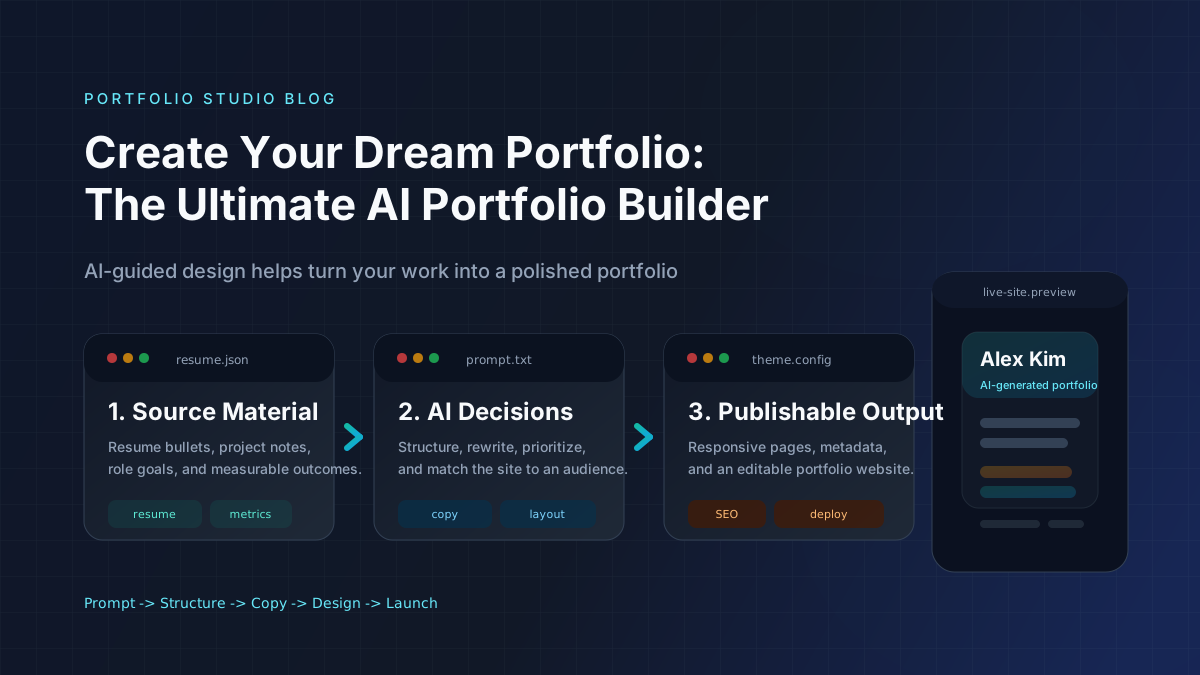
Create Your Dream Portfolio: The Ultimate AI Portfolio Builder
Build a portfolio website, resume website, or personal website with an AI portfolio builder. Learn features, steps, mistakes, and tools.